
Property Investing Made Easy
House vs Apartment vs Townhouse: Which Investment Property Is Best?
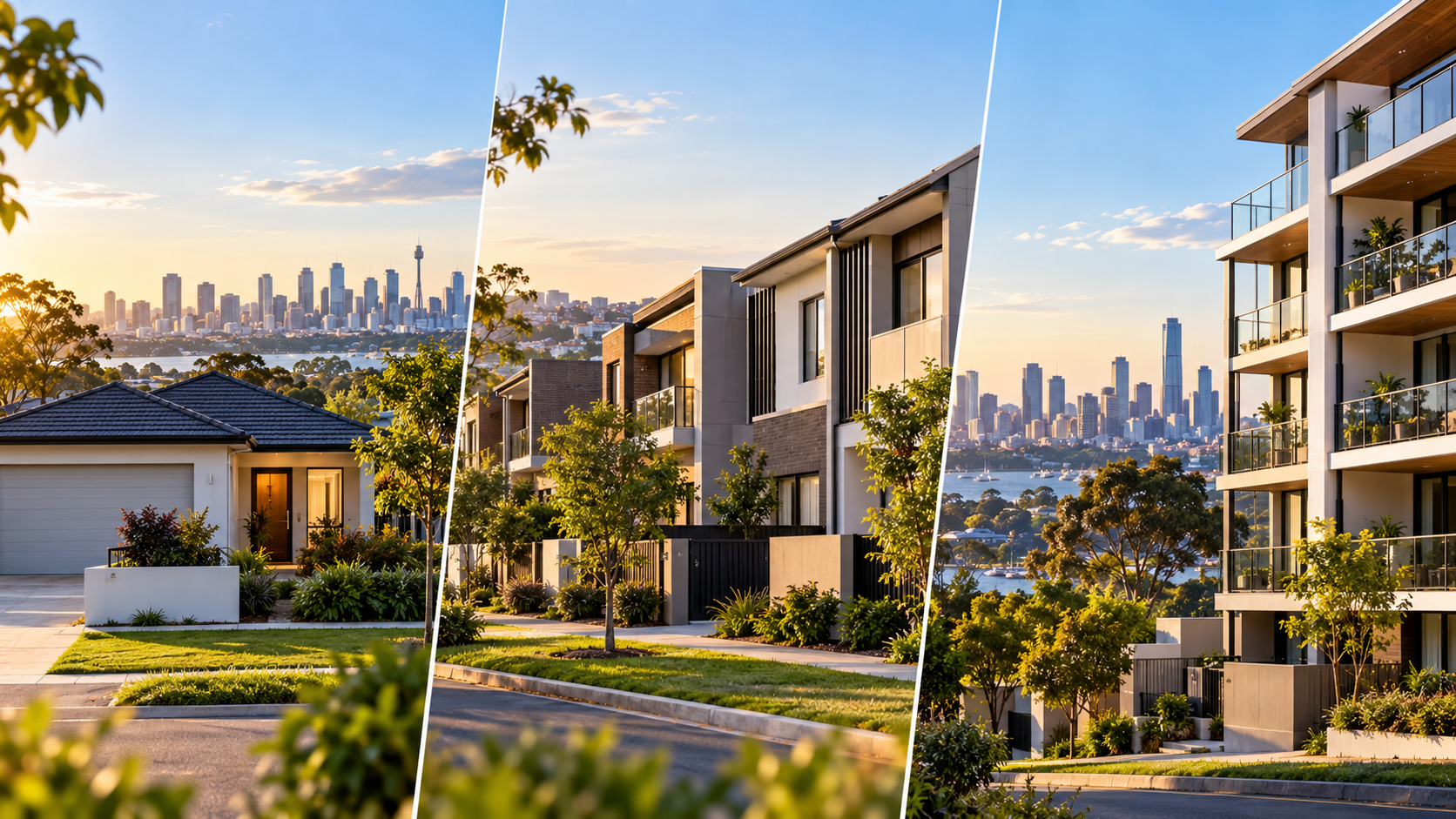
House vs Apartment vs Townhouse: Which Investment Property Is Best?
One of the first decisions property investors face is choosing what type of property to buy.
Should you invest in a house? An apartment? Or perhaps a townhouse?
There is no universal answer. The best investment property depends on your goals, budget, investment strategy and the location you’re considering.
Many first-time investors spend a lot of time comparing property types, but the reality is that location, demand and long-term growth drivers often have a greater impact on performance than the dwelling itself.
If you’re new to investing, start with our guide to Property Investing for Beginners in Australia. It explains the fundamentals of building a property investment strategy before choosing a property type.
In this article, we’ll compare houses, apartments and townhouses to help you determine which option may be best suited to your investment goals.
What Makes a Good Investment Property?
Before comparing property types, it’s important to understand what drives investment performance.
A strong investment property typically offers:
- Long-term capital growth potential
- Consistent rental demand
- Sustainable cash flow
- Owner-occupier appeal
- Limited supply
- Strong local economic drivers
Many investors become focused on the property itself while overlooking the market behind it.
For example, an average house in a high-growth location may outperform a luxury apartment in an oversupplied market.
That’s why choosing the right location is often more important than choosing the perfect property.
You can learn more about this in our article on How to Choose the Right Investment Property in Australia (Internal Link: Add URL when published).
Investing in Houses
Houses remain one of the most popular property types among Australian investors.
This is largely because houses generally include a larger land component, and land is often the asset that appreciates most over time.
Advantages of Investing in Houses
Strong Capital Growth Potential
Historically, houses have often delivered stronger long-term capital growth than other property types because land becomes increasingly scarce.
Greater Owner-Occupier Demand
Families and owner-occupiers frequently compete for houses, which can support property values over time.
Land Value Benefits
Unlike apartments, houses sit on their own parcel of land. This can provide greater long-term growth opportunities.
Flexibility
Houses may offer future opportunities such as:
- Renovations
- Extensions
- Secondary dwellings
- Redevelopment potential (subject to council approval)
Disadvantages of Investing in Houses
Higher Purchase Prices
Houses generally require a larger deposit and higher borrowing capacity.
Increased Maintenance
Investors are responsible for maintaining:
- Roofs
- Gardens
- Fences
- External structures
Lower Rental Yield in Some Markets
While houses often deliver stronger growth, rental yields can sometimes be lower than apartments.
Investing in Apartments
Apartments are often viewed as a more affordable entry point into property investing.
In many major Australian cities, apartments provide investors with access to desirable locations that may otherwise be unaffordable.
Advantages of Investing in Apartments
Lower Entry Cost
Apartments typically have lower purchase prices than houses in the same area.
This can make them attractive to first-time investors.
Strong Rental Demand
In many metropolitan areas, apartments appeal to:
- Young professionals
- Students
- Couples
- Downsizers
Reduced Maintenance Responsibilities
Many external maintenance responsibilities are managed through the body corporate.
Disadvantages of Investing in Apartments
Body Corporate Fees
Apartments often include ongoing strata or body corporate costs.
Potential Oversupply
In some markets, large volumes of apartment construction can increase competition and limit growth.
Smaller Land Component
Because apartments share land ownership across multiple dwellings, they generally have a smaller land component than houses.
This can influence long-term growth performance.
Investing in Townhouses
Townhouses often sit between houses and apartments in terms of affordability, maintenance and growth potential.
For many investors, they represent a balanced option.
Advantages of Investing in Townhouses
More Affordable Than Houses
Townhouses often provide access to desirable suburbs at a lower entry price than detached houses.
Family Appeal
Many townhouses attract:
- Young families
- Couples
- Downsizers
This can support both rental demand and resale demand.
Lower Maintenance Than Houses
Townhouses generally require less maintenance than standalone houses while still offering more space than apartments.
Disadvantages of Investing in Townhouses
Smaller Land Component
Like apartments, townhouses typically have less land than detached houses.
Body Corporate Considerations
Some townhouse developments include body corporate fees and restrictions.
Growth Varies Significantly
Townhouse performance often depends heavily on location and supply levels.
House vs Apartment vs Townhouse Comparison
| Feature | House | Townhouse | Apartment |
|---|---|---|---|
| Capital Growth Potential | High | Medium-High | Medium |
| Rental Yield | Medium | Medium | Medium-High |
| Entry Cost | High | Medium | Low |
| Maintenance Requirements | High | Medium | Low |
| Land Ownership | High | Medium | Low |
| Owner-Occupier Demand | High | Medium-High | Medium |
| Affordability | Low | Medium | High |
| Development Potential | High | Low | Low |
Which Property Type Is Best for First-Time Investors?
Many first-time investors assume there is a single “best” property type.
In reality, the answer depends on your circumstances.
- A house may suit an investor focused on long-term capital growth.
- An apartment may suit someone looking for a lower entry point into the market.
- A townhouse may provide a balance between affordability and growth potential.
Rather than asking:
Which property type is best?
Ask:
Which property type best aligns with my investment strategy?
Understanding Capital Growth vs Rental Yield can help answer this question.
For many investors, success comes from selecting the right property in the right location rather than focusing exclusively on the dwelling type.
Investors researching growth corridors should also consider suburbs such as Greenbank (Internal Link), where population growth and infrastructure investment continue to attract owner-occupiers and tenants.
Common Mistakes When Choosing Property Types
Buying Based on Personal Preference
Investment decisions should be based on market demand, not personal taste.
Choosing the Cheapest Option
The cheapest property isn’t always the best investment.
Investors should consider growth potential, demand and long-term performance.
Ignoring Location
Location remains one of the strongest drivers of investment performance.
A great property in a poor location may struggle to deliver strong results.
Chasing Yield Alone
High rental yields can sometimes indicate weaker long-term growth prospects.
Investors should evaluate both cash flow and growth potential before making a decision.
The Australian Securities and Investments Commission’s Moneysmart Property Investing Guide is a useful resource for understanding property investment risks and responsibilities.
Frequently Asked Questions
Are houses always better investments than apartments?
Not necessarily. Houses often offer stronger long-term growth potential, but apartments may provide better affordability and rental demand in certain locations.
Do apartments have lower capital growth?
Not always. Some apartments in high-demand locations can perform very well. However, growth often depends on supply, demand and location.
Are townhouses a good investment?
Townhouses can provide a balance between affordability, growth potential and rental demand, making them attractive to many investors.
What property type do first-time investors usually buy?
This varies depending on budget, goals and market conditions. Many first-time investors choose apartments or townhouses because of lower entry costs.
Which property type offers the best rental yield?
Apartments often provide higher rental yields than houses, but results vary significantly depending on location and market conditions.
Useful Resources
Ready to Choose the Right Investment Property?
The best investment property isn’t determined solely by whether it’s a house, apartment or townhouse.
Successful investors focus on strategy, location, demand and long-term growth potential.
If you’re unsure which property type is right for your circumstances, Compass can help you develop a personalised investment strategy aligned with your financial goals.
Book a Free Consultation to discuss your next investment opportunity.