
Property Investing Made Easy
Capital Growth vs Rental Yield: Which Matters More for Property Investors?
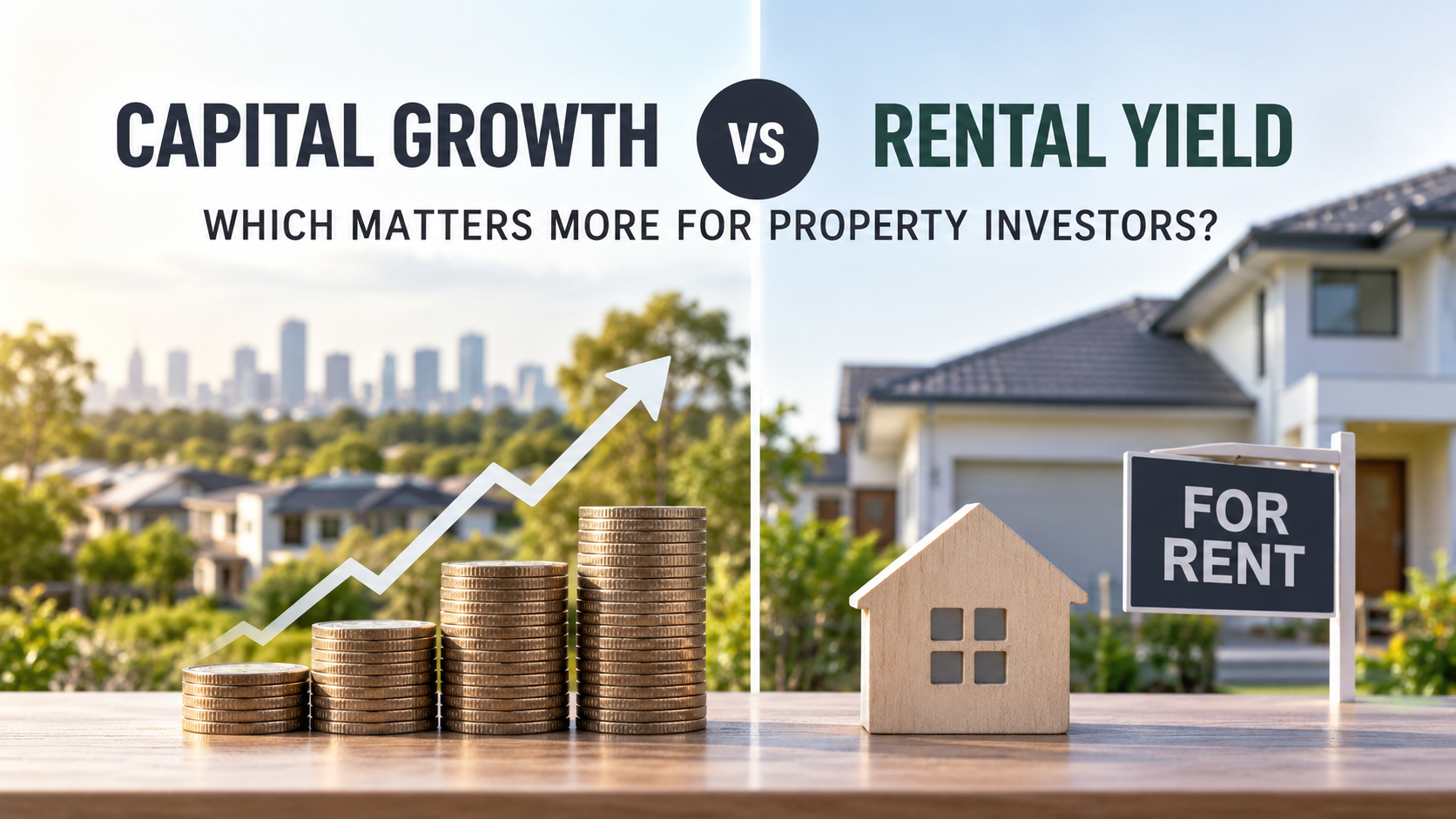
One of the most common questions new property investors ask is:
Should I focus on capital growth or rental yield?
It’s a fair question. After all, both play an important role in determining the performance of an investment property.
Capital growth is what builds long-term wealth by increasing the value of your asset over time. Rental yield, on the other hand, generates income that can help cover holding costs and improve cash flow.
Many investors mistakenly believe they must choose one over the other. In reality, successful property investing is often about finding the right balance between both.
If you’re just starting your investment journey, it’s worth first understanding the fundamentals covered in our guide to Property Investing for Beginners in Australia
Let’s break down what capital growth and rental yield actually mean, why they matter, and how they fit into a long-term investment strategy.
Quick Answer
Capital Growth | Rental Yield |
Increase in property value over time | Income generated through rent |
Builds long-term wealth | Improves short-term cash flow |
Creates equity | Helps cover expenses |
Supports portfolio growth | Reduces holding costs |
Long-term focus | Income focus |
For investors focused on building wealth, capital growth is often the primary driver of long-term returns. However, rental yield remains important because it helps make a property financially sustainable.
The most successful investors don’t necessarily chase the highest growth or the highest yield. They look for properties that offer a healthy balance of both.
What Is Capital Growth?
Capital growth refers to the increase in the value of a property over time.
Purchase Price | Future Value | Capital Growth |
$650,000 | $900,000 | $250,000 |
In this scenario, the investor has gained $250,000 in equity through capital growth alone.
This equity can potentially be used to:
- Expand a property portfolio
- Increase borrowing capacity
- Improve overall net worth
- Support future investment opportunities
This is why many experienced investors focus heavily on identifying locations with strong long-term growth fundamentals.
Some common growth drivers include:
- Population growth
- Infrastructure investment
- Employment opportunities
- Transport improvements
- Strong owner-occupier demand
- Limited housing supply
For example, investors researching growth corridors such as Greenbank often examine future infrastructure projects, population forecasts and employment trends rather than simply looking at today’s rental returns.
What Is Rental Yield?
Rental yield measures how much rental income a property generates relative to its value.
Annual Rent ÷ Property Value × 100
Property Value | Weekly Rent | Annual Rent | Rental Yield |
$600,000 | $600 | $31,200 | 5.2% |
Rental yield provides a simple way to compare the income performance of different investment properties.
Higher rental yields may help:
- Improve cash flow
- Offset mortgage repayments
- Reduce out-of-pocket expenses
- Improve holding affordability
- Provide greater financial flexibility
While rental income alone rarely creates substantial wealth, it can play a critical role in helping investors hold assets long enough to benefit from capital growth.
Why Many Investors Prioritise Capital Growth
If your goal is building long-term wealth, capital growth often has the biggest impact on your overall investment outcome.
Consider two properties:
Property A
- Purchase Price: $650,000
- Rental Yield: 6%
- Growth Rate: 2% per year
Property B
- Purchase Price: $650,000
- Rental Yield: 4.5%
- Growth Rate: 6% per year
Property A generates more rental income today.
Property B generates less rental income but experiences significantly stronger growth over time.
After 10 years, Property B may have created substantially more wealth because capital growth compounds year after year.
This is one of the reasons many investors pursue financial freedom through property investing by prioritising long-term growth fundamentals rather than chasing short-term rental returns.
Why Rental Yield Still Matters
Rental income helps cover:
- Mortgage repayments
- Property management fees
- Insurance
- Maintenance
- Council rates
- Water charges
Without sufficient rental income, investors may need to contribute significant amounts from their personal income to maintain the property.
That’s why experienced investors often seek properties that combine:
- Strong growth potential
- Healthy rental demand
- Sustainable cash flow
- Manageable holding costs
The goal isn’t simply finding the highest-growth property available.
The goal is finding a property you can comfortably hold long enough for growth to work in your favour.
Compass Insight: Don’t Buy for Yourself
One of the biggest mistakes new investors make is buying a property based on personal preference.
A home buyer and an investor often evaluate property very differently.
Home buyers may focus on:
- Lifestyle
- Personal taste
- Renovation potential
- Emotional appeal
Investors should focus on:
- Rental demand
- Infrastructure
- Employment growth
- Population trends
- Future development
- Market fundamentals
This approach helps remove emotion from decision-making and encourages a focus on long-term performance.
This is particularly important for first-time property investors who are still learning how to evaluate property opportunities objectively.
Can You Have Both Growth and Yield?
The good news is that capital growth and rental yield don’t have to be mutually exclusive.
Many successful investors look for locations that offer:
- Strong population growth
- Expanding infrastructure
- Employment opportunities
- Healthy rental demand
- Sustainable yields
Rather than chasing a single metric, experienced investors evaluate multiple factors together.
Common Mistakes Investors Make
Chasing the Highest Yield
High rental yields can sometimes indicate weaker long-term growth prospects.
Ignoring Cash Flow
Growth is important, but so is affordability.
Buying on Emotion
Successful investors focus on data and strategy rather than personal preferences.
Following Market Hype
Strong investment decisions are generally based on long-term fundamentals rather than short-term headlines.
Which Strategy Is Right for You?
Investor Goal | Typical Priority |
Long-term wealth creation | Capital Growth |
Portfolio expansion | Growth + Cash Flow |
Passive income | Rental Yield |
First investment property | Balanced Approach |
Financial flexibility | Sustainable Yield |
There is no one-size-fits-all answer.
The right strategy depends on your financial position, risk tolerance, investment goals and time horizon.
Frequently Asked Questions
How do I know if a suburb has growth potential?
Investors often assess population growth, infrastructure investment, employment opportunities, housing supply and rental demand.
Useful sources include:
- ASIC’s Moneysmart property investing guide
- Australian Bureau of Statistics (ABS)
- Reserve Bank of Australia (RBA)
- Australian Taxation Office (ATO)
- CoreLogic Australia
Ready to Build Long-Term Wealth Through Property?
Understanding the difference between capital growth and rental yield is one thing. Finding the right property that balances both is another.
Whether you’re purchasing your first investment property or looking to expand your portfolio, Compass can help you identify opportunities aligned with your financial goals and long-term strategy.
Learn more about financial freedom through property investing , meet the Compass team, or book a free consultation to discuss your investment goals.